Gradient System · Electromagnetic
Designing the coils that encode position, and making the shape of the encoding field a variable rather than a property of the hardware.
The question
In every scanner built so far the spatial encoding field is fixed by the winding pattern at manufacture. Its shape is the same for every voxel of every scan for the life of the machine. If a gradient coil is driven instead as an array of independently controlled elements, the region over which the field is held linear becomes something chosen per acquisition. That changes what limits encoding speed, because the electric field induced in the body depends on the geometry of that region and not only on the strength of the gradient.
What we work on
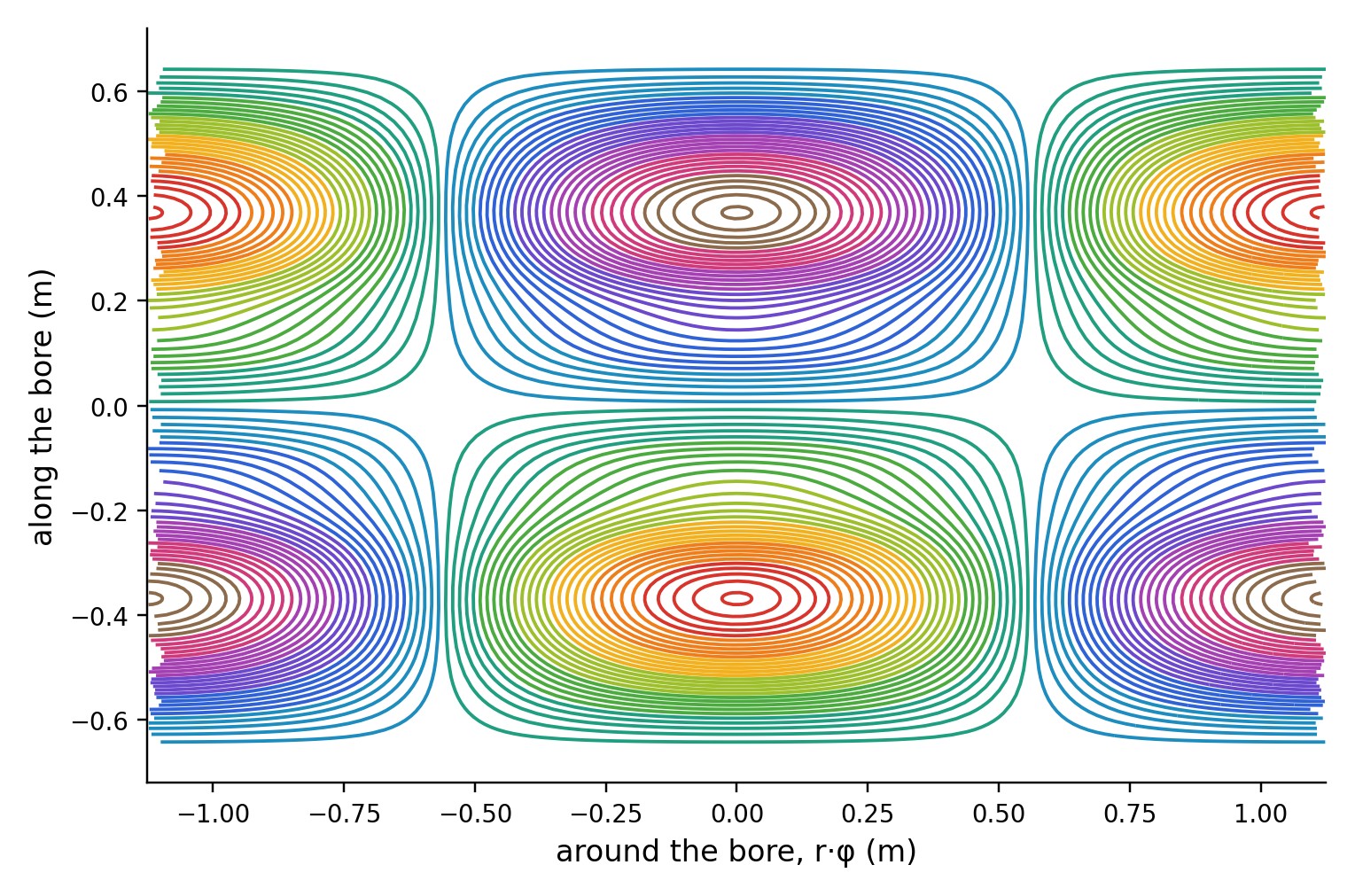
- A complete design pipeline. From a target-field solve for the current distribution, through a finite copper conductor pattern, to an interconnected and routed board, a three-dimensional model, and verification that the manufactured pattern reproduces the field it was designed for. A full three-axis shielded set has been taken through this pipeline end to end.
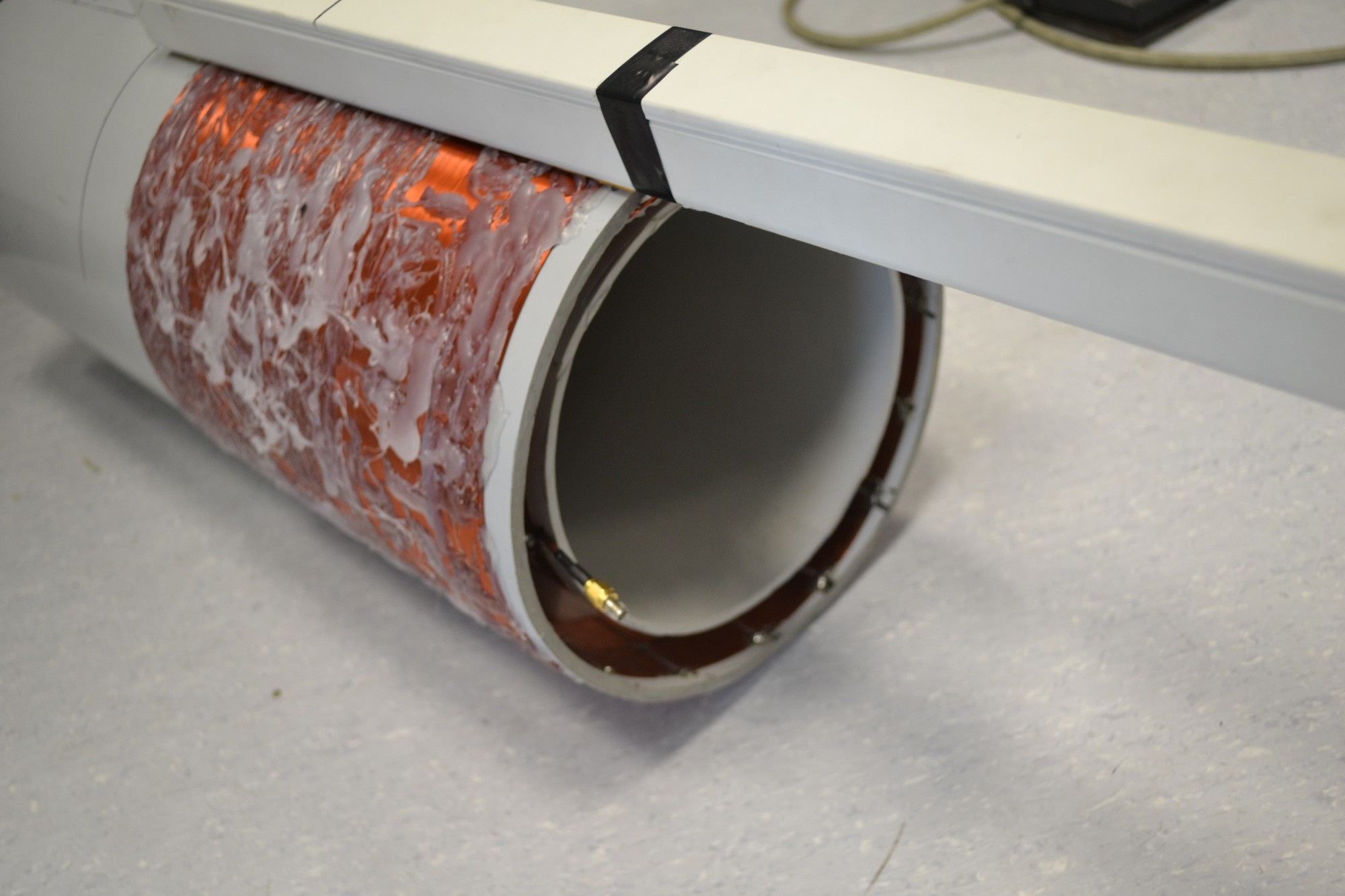
- Array coils, where the same pipeline is reused but the elements are cut and tapped so that they can be driven separately.
- Losses at frequency. Proximity and skin effect in the conductor, which decide how much power the coil dissipates when it is switched hard.
- Eddy currents induced in the surrounding conducting structures, and how an array can be used to compensate them rather than merely pre-emphasise against them.
Technical notes
Designing a Shielded Gradient Set → From a target field to a routed winding, and the check that the manufactured pattern still produces the field it was designed for.Support: The eddy-current work is carried by TUBITAK 1001 project 125E832 (2026–2029). See Funding.