RF Receiver · Electromagnetic
How much signal-to-noise ratio is physically available before any amplifier is chosen, and what coil geometry comes closest to it.

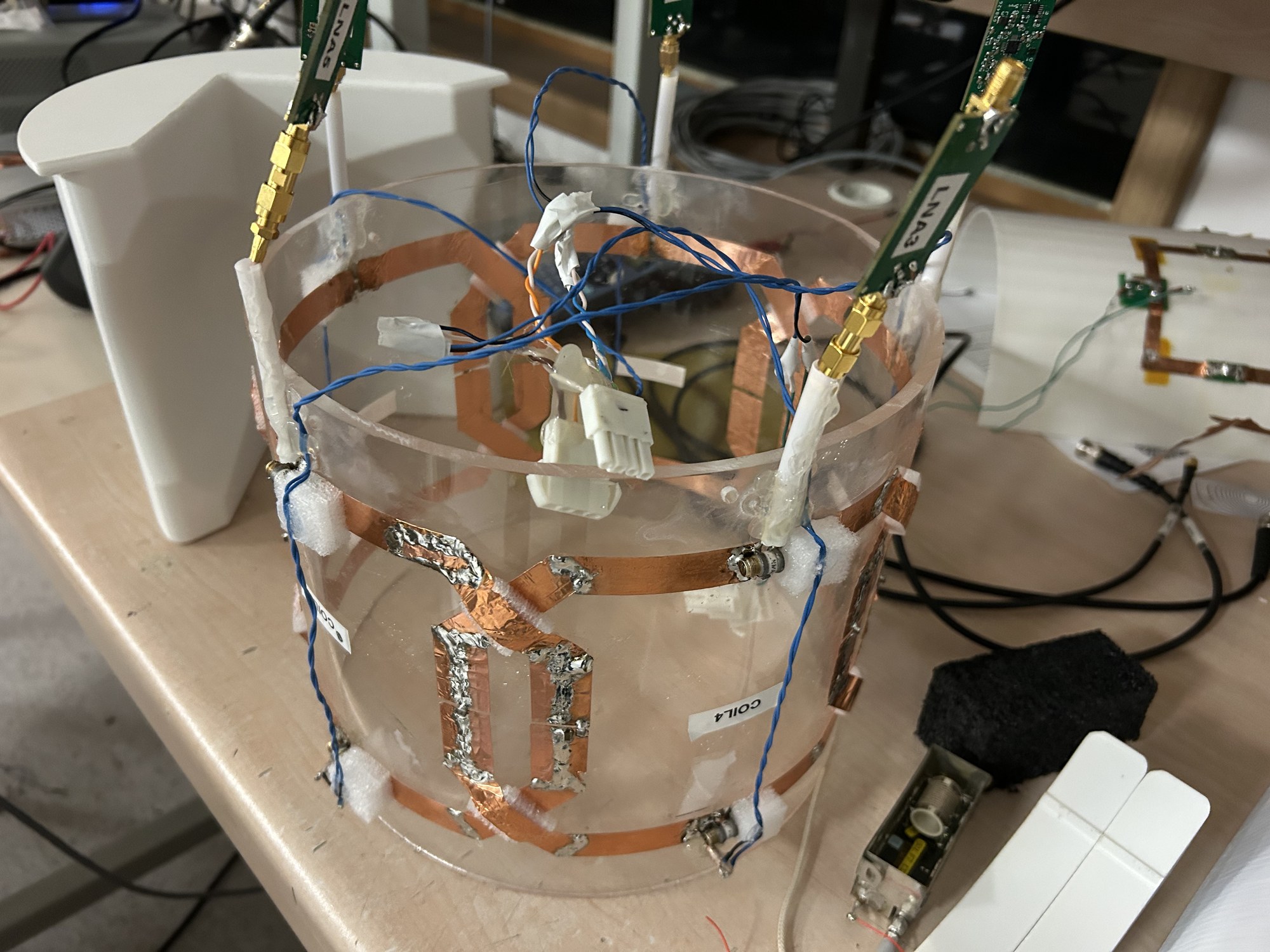
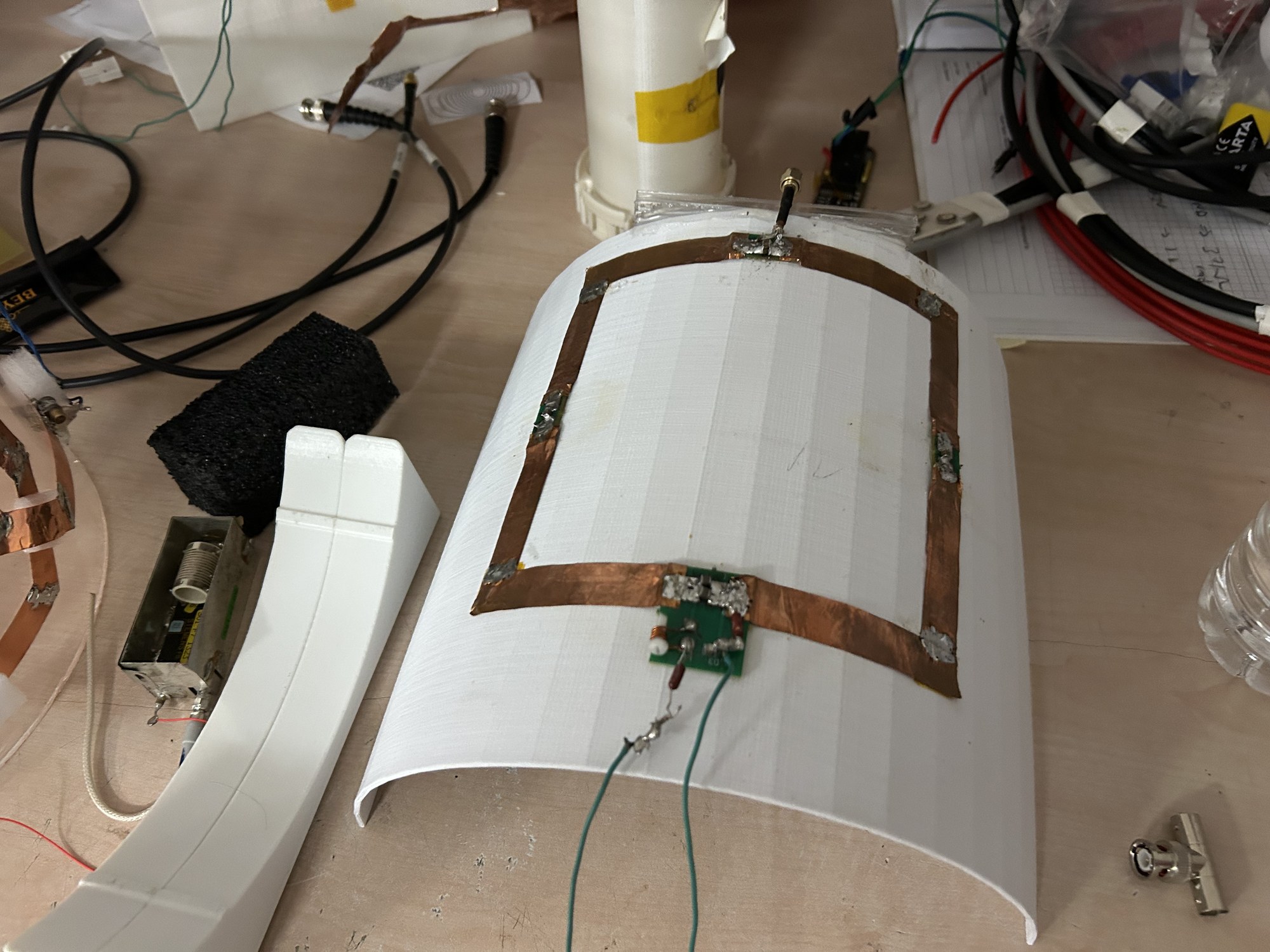
The question
For a given body, field strength and region of interest there is an upper bound on the signal-to-noise ratio that no receive coil can exceed, set by the electromagnetic problem alone. That bound, the ultimate intrinsic SNR, is the yardstick against which a real array should be measured. A coil that reaches 70 per cent of it is good; one that reaches 30 per cent has room left, and the gap tells you where to look.
What we work on
- Ultimate intrinsic SNR at low field. Computing the bound for realistic body models rather than uniform spheres, with full-wave and quasi-static formulations compared against each other.
- Array coils and coupling. Mutual coupling between array elements, scattering matrix formulations, and what coupling costs in sensitivity.